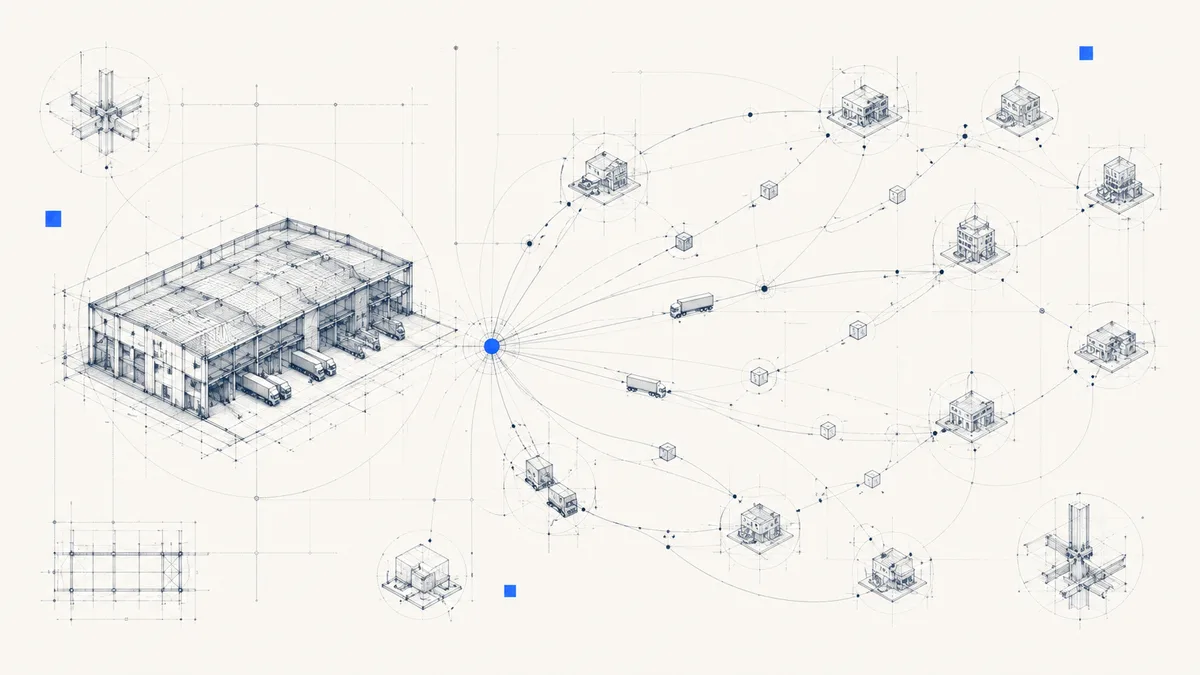
A logistics or e-commerce fulfilment business can use an AI agent to answer "where is my order?", share tracking updates, explain pickup deadlines and fees, start returns, and triage delivery exceptions — automatically, around the clock. What it should not do alone is rule on lost or damaged cargo, customs problems, high-value claims, or compensation disputes; those go to a person. The split is simple: the agent handles the repetitive status questions that flood every shipper's inbox, and judgment calls go to your team.
This matters because tracking enquiries are the single largest, most repetitive support load in the entire sector — and they arrive at all hours, in every time zone a parcel travels through. "Where is my order?" requests, known in the industry as WISMO, can make up 20% to 40% of e-commerce support tickets, climbing higher during peak seasons, per industry analyses summarised by Salesforce and Radial. This guide covers what an AI agent can and cannot do for a fulfilment business, why tracking eats so much support time, how to handle returns and delivery exceptions, the after-hours advantage, and when to hand off to a human.
What can an AI agent do for a logistics or e-commerce fulfilment business?
An AI agent can answer tracking enquiries, share order status, explain pickup codes and deadlines, initiate returns, triage delivery exceptions, and qualify enquiries before a person ever steps in. What it should not resolve on its own are lost or damaged shipments, customs and duty problems, chargebacks, high-value or insured-cargo claims, and compensation disputes — anything involving money, liability, or a judgment call about who is at fault.
The reason the line sits there is volume versus stakes. The vast majority of inbound messages are low-stakes and identical — "is it shipped yet?", "when will it arrive?", "what's the pickup deadline?" — and these are perfect for instant automation. A small minority are high-stakes and unique — a damaged pallet, a parcel stuck in customs, a disputed delivery — and those need a human who can take responsibility. An AI agent that nails the first category buys your team the time to handle the second one well.
Here is the safe split:
| AI agent handles | Always routes to a human / does NOT do |
|---|---|
| "Where is my order?" / tracking status | Lost or damaged shipment claims |
| Pickup codes, deadlines, and fee FAQs | Customs, duties, and clearance problems |
| Return and exchange initiation | Chargebacks and payment disputes |
| Delivery-exception triage (address fixes, redelivery) | High-value or insured-cargo claims |
| Order and shipping FAQs | Compensation and liability disputes |
| Qualifying and routing the enquiry | Anything requiring a fault or refund decision |
For a wider view of how AI fits different sectors, see our overview of AI customer service by industry.
Why do tracking enquiries eat so much support time?
Tracking enquiries eat so much support time because every shipment generates the same anxious question on repeat, and customers ask the moment they feel uncertain — not on a schedule that fits your support hours. As noted above, WISMO contacts can account for 20–40% of e-commerce support volume, per Salesforce. When a single, automatable question is a third of your ticket load, automating it is the highest-leverage move a fulfilment business can make.
The underlying parcel volume is enormous and still growing. In the United States alone, carriers handled 22.4 billion parcels in 2024, up 3.4% year over year, per the Pitney Bowes Parcel Shipping Index (2025). Every one of those parcels is a potential "where is it?" message — often several, as customers re-check at dispatch, in transit, and on the day of delivery. The math is unforgiving: more parcels means more status anxiety, and status anxiety converts directly into support tickets.
The same pattern shows up wherever online shopping is dense. In Hong Kong, online-shopping and logistics issues generated roughly 17,000 complaints to the Consumer Council, about 40% of all its cases, per the Consumer Council (2024) — with disputes over pickup deadlines and delayed status notifications among them. That figure is an illustrative Asian-market example, but the dynamic is universal: when fulfilment goes opaque, customers escalate.
The practical takeaway: most tracking enquiries are answerable from data the customer can't easily see but you can. An AI agent that surfaces that status instantly, in the customer's own messaging app, removes the friction before it becomes a ticket.
How does an AI agent handle returns, pickups, and delivery exceptions?
An AI agent handles the structured, repeatable parts of returns and delivery problems — starting a return, sharing a pickup code or deadline, fixing a delivery address, or arranging redelivery — while escalating anything involving damage, loss, or money to a person. These post-purchase moments are where customer loyalty is won or lost, and they are also highly scripted, which makes them ideal for a guided flow.
Returns volume alone justifies the effort. US consumers returned an estimated $890 billion of merchandise in 2024, with an overall return rate of 16.9%, and online returns running materially higher than in-store, per NRF and Happy Returns (2024). Each return is a multi-message conversation — reason, eligibility, label, drop-off or pickup, refund timing. A guided AI flow can walk a customer through the routine path and only loop in a human when the case is genuinely exceptional.
Delivery exceptions are where speed matters most, because a small problem caught early stays small. A useful pattern is to let the agent triage by type: an address typo or a missed delivery can often be resolved with a guided flow (confirm details, rebook a slot), while a "tracking says delivered but I didn't receive it" message should be acknowledged, logged, and routed to a human for investigation — never auto-resolved. The customer gets an instant, calm first response; your team gets a clean, pre-triaged case instead of a panicked thread.
A multi-step conversation flow builder is what makes this reliable: you design the return or redelivery journey once — the questions, the choices, the actions — and the agent runs it the same way every time, day or night. For a fuller picture of running costs, see the real cost of AI agents for small business.
Why is after-hours coverage the biggest win for shippers?
After-hours coverage is the biggest win for shippers because parcels move 24/7 across time zones, but support desks don't — and an unanswered "where is my order?" at 11pm is exactly when a customer's patience runs out. An AI agent keeps the channel live when your team is offline, turning dead hours into resolved enquiries instead of stacked-up morning tickets and one-star reviews.
The stakes are loyalty, not just convenience. On-time, predictable delivery now matters more to shoppers than raw speed, and about half of US consumers actively check their tracking status to confirm an order is on track, per McKinsey (2025). Crucially, McKinsey finds customers become more forgiving when shippers proactively communicate — which is precisely what an always-on agent can do at the moment of doubt.
Patience for failure is thin. Roughly 35% of shoppers say they will abandon a brand for good after a single late delivery, per the Bringg 2025 State of Retail Delivery survey (reported 2026). You may not control the carrier, but you do control whether the customer can get a clear answer when they ask. A fast, accurate status update at midnight is often the difference between a retained customer and a churned one. As Omago puts it: stay open while you're closed.
What after-hours coverage should look like:
- Instant first response — acknowledge the message and surface order/tracking status immediately.
- Self-serve actions — let the customer start a return, fix an address, or rebook a slot through a guided flow.
- Proactive nudges — send pickup-deadline and delivery-window reminders before the customer has to ask.
- Clean escalation — capture and route anything exceptional so a human can resolve it first thing.
How does an AI agent know when to hand off to a human?
It hands off whenever a case involves loss, damage, money, liability, or a fault decision — or whenever the customer asks for a person — passing the full conversation into the same thread so nothing is repeated. The agent's job is to clear the repetitive status, return, and exception traffic so your team's hours go to the cases that actually need human judgment and authority. Over-automating into compensation and liability decisions is the one mistake that erodes trust.
The right model is AI for instant status, qualification, returns initiation, and exception triage, with a fast, visible path to a human for everything contested or costly. Customers happily accept a bot for "where is my parcel?" while expecting a real person for "my shipment arrived smashed — what are you going to do about it?"
Clear handoff triggers for a fulfilment business:
- Lost, missing, or "delivered but not received" shipments needing investigation.
- Damaged goods or cargo and any insurance or compensation claim.
- Customs, duty, or clearance problems.
- Chargebacks, refunds in dispute, and payment issues.
- High-value, fragile, or specially handled consignments.
- Any explicit request to speak to a person.
This is the model behind Omago, an AI agent platform that helps SMEs automate customer conversations across WhatsApp, Telegram, and web chat (with LINE and Instagram coming) — handling tracking, returns, and after-hours enquiries so your team focuses on the cases that need a human. For the same boundary-aware approach in other sectors, see our guides for medical aesthetic clinics, insurance and financial advisers, and professional services firms.
What does it cost to run an AI agent for fulfilment enquiries?
The cost is lower than most shippers expect, largely because the most common enquiry — a customer messaging "where's my order?" — is the cheapest kind to handle. Replying to a customer who messages you first is free within WhatsApp's rolling 24-hour service window, per WhatsApp Business' official pricing; only business-initiated templates, such as proactive delivery-window reminders, carry a per-message charge.
Omago pricing is in USD — Free (50 messages), Core $49, Plus $99, and Max $369 per month — with local-currency billing available via your provider. WhatsApp and Telegram start at the Plus tier. For a high-volume, tracking-heavy operation, the relevant comparison is the cost of one plan against the staff hours currently spent retyping the same status updates and the customers lost to slow or absent replies. For the full breakdown, see the real cost of AI agents for small business, and for responsible setup, our AI governance guide for small business.
A basic deployment is self-serve and takes roughly 15–20 minutes to stand up, with hands-on onboarding support available for new customers. You do not need to automate everything on day one — start with tracking and returns, the two highest-volume flows, and expand from there.
Frequently Asked Questions
Can an AI agent answer "where is my order?" automatically?
Yes — this is its single highest-value job for a fulfilment business. WISMO ("where is my order?") enquiries can account for 20–40% of e-commerce support tickets, per Salesforce and Radial, and they are repetitive and data-driven, which makes them ideal for instant automation. The agent surfaces order and tracking status in the customer's own messaging app, around the clock, without pulling a person away from more complex cases.
Should an AI agent handle lost or damaged shipment claims?
No — these should always route to a human. Lost, missing, damaged, and "delivered but not received" cases involve liability, fault decisions, and often compensation, none of which a chatbot should resolve alone. The safe design is for the agent to acknowledge the message instantly, log the details, and hand a clean, pre-triaged case to a person to investigate and decide.
Why does after-hours coverage matter so much for logistics?
Because parcels move 24/7 but support desks don't, and customer patience is thinnest exactly when no one is online. On-time delivery and clear communication drive loyalty — McKinsey finds customers are more forgiving when proactively updated, while around 35% say they will abandon a brand after a single late delivery (Bringg, 2025). An always-on AI agent answers the midnight "where is it?" before it becomes a lost customer.
Can an AI agent process returns and exchanges?
Yes, for the structured part of the journey. A guided conversation flow can confirm the reason, check eligibility, issue a label, and arrange drop-off or pickup, then escalate anything unusual — a damaged item, a disputed refund — to a person. Given that online return rates run well above the overall retail figure (16.9% in 2024, per NRF and Happy Returns), automating the routine return path frees up meaningful support time.
How much does an AI agent for fulfilment cost?
Omago pricing is in USD — Free (50 messages), Core $49, Plus $99, and Max $369 per month — with local-currency billing via your provider, and WhatsApp/Telegram available from the Plus tier. Because replying to a customer who messages first is free within WhatsApp's 24-hour service window, the most common enquiry (a tracking question) is also the cheapest to handle. Only business-initiated templates, like proactive reminders, carry a per-message charge.
Sources: Salesforce, WISMO guide (current); Radial, WISMO insights (current); Pitney Bowes Parcel Shipping Index (2025, featuring 2024 data); NRF and Happy Returns retail returns report (2024); McKinsey, "What do US consumers want from e-commerce deliveries?" (2025); Bringg State of Retail Delivery survey (2025); Hong Kong Consumer Council, online-shopping and logistics complaints (2024); WhatsApp Business platform pricing (current). Hong Kong figures are cited as an illustrative Asian-market example; equivalent parcel-volume, returns, and delivery-expectation dynamics exist worldwide.