Not every business gets the same value from AI customer service. A salon that receives 80 WhatsApp messages per week will see very different results from a consulting firm that receives 5. The difference is not about the AI — it is about message volume, query predictability, and conversion speed.
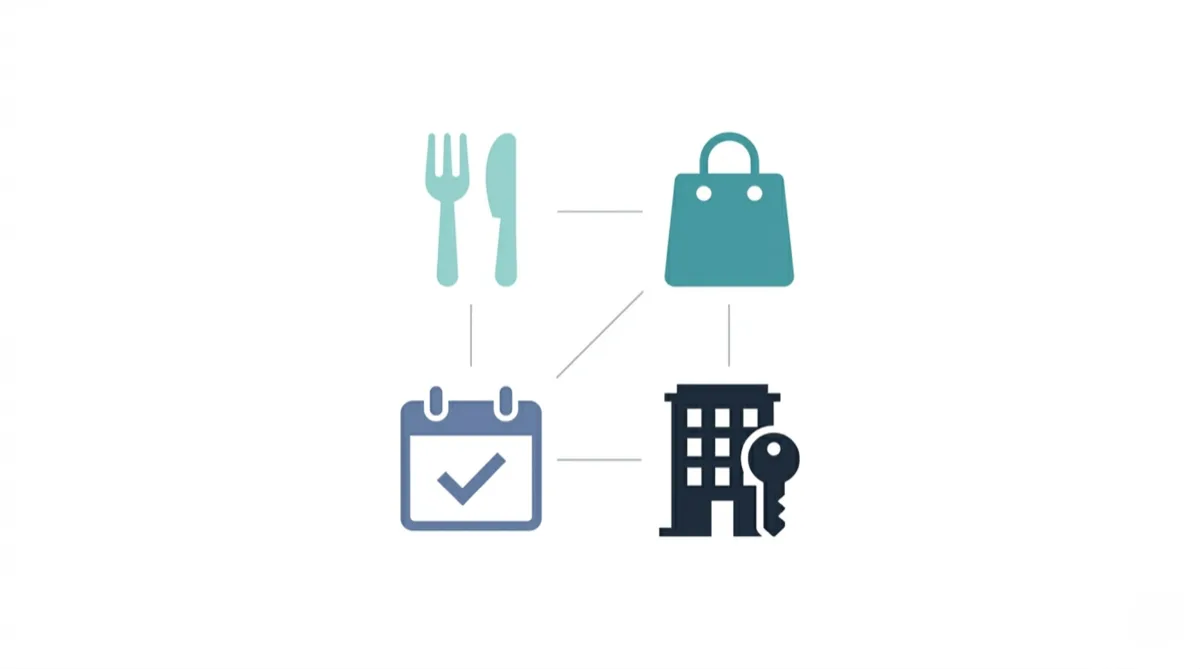
This guide compares four industries — restaurants, retail, professional services, and real estate — to show which characteristics make a business well-suited for AI customer service, and which businesses should wait.
What Makes a Business a Strong Fit for AI Customer Service?
Three factors determine how much value AI delivers.
Query predictability. Businesses where 70% or more of incoming messages fall into a small set of repeatable questions (hours, pricing, availability, policies) get the highest AI coverage. Restaurants and clinics score highest here. Consulting firms and creative agencies, where every enquiry is unique, score lowest.
Response-time sensitivity. In some businesses, a 10-minute response converts; a 10-hour response does not. Restaurants (table bookings), retail (impulse purchases), and real estate (competitive listings) are highly time-sensitive. Accounting firms and legal practices are less so — clients expect a measured, considered response, not an instant one.
After-hours message volume. If your business receives meaningful enquiry volume outside operating hours, AI provides coverage you cannot staff. Restaurants (evening diners), retail (evening browsers), and clinics (parents booking after work) have the strongest after-hours patterns.
How Do the Four Industries Compare?
| Factor | Restaurants & F&B | Retail & E-commerce | Professional Services | Real Estate |
|---|---|---|---|---|
| Query predictability | Very High (menu, hours, reservations) | High (products, stock, shipping) | High (pricing, booking, intake) | Medium-High (listings, viewings, qualifications) |
| Response-time sensitivity | Very High (bookings are time-critical) | Very High (purchase intent decays fast) | High (booking intent is time-sensitive) | Very High (first responder wins) |
| After-hours volume | Very High (peak messaging 6–10 PM) | High (browsing peaks evenings/weekends) | Medium-High (parents/clients after work) | High (browsing evenings and weekends) |
| Typical AI coverage rate | 70–85% of messages | 60–75% of messages | 65–80% of messages | 55–70% of messages |
| Strongest AI use case | Reservation capture + menu FAQ | Product Q&A + stock checks | Booking + intake collection | Lead qualification + viewing scheduling |
| Weakest AI use case | Complaints, custom modifications | Returns, subjective advice | Clinical/legal advice, emotional cases | Negotiations, valuations, disputes |
| Estimated ROI timeline | 1–2 weeks | 1–2 weeks | 2–4 weeks | 2–4 weeks |
Restaurant and F&B: The Fastest ROI
Restaurants are the strongest natural fit for AI customer service. Message volume is high, queries are highly predictable, and conversion is directly tied to response speed.
According to the National Restaurant Association's 2026 State of the Restaurant Industry report, 26% of operators already use AI tools, and 41% plan to invest. In Hong Kong, a case study with Maxim's Group's Eatizen via Omnichat reported a 50–100% uplift in average transaction value from AI-identified customer segments.
Best starting point: After-hours reservation capture and menu FAQ automation. A restaurant recovering just two additional bookings per week through AI pays for the platform in the first week.
Watch out for: Keeping menu data current (especially daily specials and sold-out items) and routing complaints to humans immediately.
Retail and E-commerce: Speed Equals Sales
Retail AI delivers value through response speed. When a customer messages about a product and receives an answer in 10 seconds versus 10 hours, the conversion probability changes dramatically.
A WhatsApp Business case study with JJMehta Camera Store reported a 15% sales increase using Business AI, with average response times of 10–15 seconds. In Hong Kong, Sa Sa reported 50% of enquiries handled by chatbot with 57% shorter waiting times.
Best starting point: Product Q&A automation and after-hours message handling. Retail businesses with Instagram-to-WhatsApp customer flows see the strongest impact because AI catches the transition from browsing to buying intent.
Watch out for: Inventory accuracy (never automate stock answers without current data) and routing returns/exchanges to human staff.
Professional Services: The Highest Conversion per Message
Appointment-based businesses have the highest conversion value per AI interaction. Each booking represents $50–$500 in service revenue, and the conversion path is linear: enquiry → qualification → booking.
A WhatsApp Business case study with Be@me reported a 6X increase in bookings and 38% lower cost per lead. MEDILASE in Hong Kong reported a 25% increase in bookings via WhatsApp and an 18% improvement in show-up rates through automated reminders.
Best starting point: 24/7 booking capture with an intake conversation flow. Clinics and salons that lose bookings between 7 PM and 9 AM will see the most immediate impact.
Watch out for: Never providing clinical, medical, or legal advice through AI. Strict handoff rules for sensitive topics.
Real Estate: The Competitive Differentiator
In real estate, AI is less about efficiency and more about competitive advantage. When multiple agencies represent similar properties, the one that responds first gets the client.
The Centaline/HKPC case study reported 137% more potential customers in one month, with 57% entering via WhatsApp. Zillow's 2025 Consumer Housing Trends Report confirms that 53% of buyers prefer text or messenger communication.
Best starting point: Instant listing enquiry response + structured lead qualification flow. Real estate businesses should prioritise WhatsApp because it is where the leads are.
Watch out for: Never providing valuations, investment advice, or handling price negotiations through AI. These carry professional and legal liability.
Which Industry Should NOT Rush into AI Customer Service?
Businesses where the following conditions are true should consider waiting.
Low message volume (fewer than 10 enquiries per week). If you can comfortably handle all messages manually, the setup time may not justify the return. Start with a free tier to test, but do not invest in a paid plan until volume warrants it.
Every enquiry is unique. Management consultants, creative agencies, and bespoke service providers receive enquiries that require deep contextual understanding. AI can acknowledge and collect initial details, but the substantive response must be human.
Regulated advice is the core service. Financial advisors, lawyers, and healthcare providers offering clinical guidance should use AI strictly for logistics (booking, directions, documents needed) and never for professional advice.
How to Choose the Right Starting Point for Your Industry
| If You Are... | Start With... | Expect Results In... |
|---|---|---|
| A restaurant or café | Reservation capture + menu FAQ automation | 1–2 weeks |
| A retail shop or e-commerce brand | Product Q&A + after-hours message handling | 1–2 weeks |
| A clinic, salon, or tutoring centre | 24/7 booking capture + intake flow | 2–4 weeks |
| A real estate agency or property manager | Lead qualification flow + viewing scheduling | 2–4 weeks |
Several AI agent platforms support all four verticals with customisable conversation flows — from reservation capture to lead qualification to booking intake. Omago offers a free starting tier with WhatsApp and Telegram integration on paid plans, and provides hands-on setup support. SleekFlow and Respond.io are strong alternatives with CRM integrations and multichannel automation. For Hong Kong businesses specifically, Omnichat specialises in online-merge-offline commerce with deep WhatsApp integration. The best choice depends on your message volume, channel mix, and whether you need a guided setup or prefer self-service configuration.
Frequently Asked Questions
Which industry sees the fastest ROI from AI customer service?
Restaurants and retail consistently show results within the first one to two weeks, due to high message volume, predictable queries, and direct revenue impact from faster responses. Professional services and real estate typically see results within two to four weeks because the sales cycle is longer, but the per-conversion value is higher.
Can one AI platform serve different types of businesses?
Yes. The underlying AI capability (understanding messages, matching to knowledge base, executing conversation flows) is the same regardless of industry. What changes is the configuration: the knowledge base content, the conversation flow design, and the handoff rules. A restaurant uploads menus and reservation policies; a clinic uploads services and intake requirements; the AI platform handles both.
My business spans multiple verticals — how should I set up AI?
Create separate conversation flows for each service line. For example, a hotel with a restaurant and spa would have a reservation flow, a dining enquiry flow, and a spa booking flow. The AI routes customers to the right flow based on their initial message. Most platforms support multiple flows from a single dashboard.
Is AI customer service worth it for a very small business (1–2 staff)?
Often more so than for larger businesses. A solo operator or two-person team has zero capacity to respond to messages while serving in-person customers. AI provides coverage during the exact moments when the owner is occupied — which, for small businesses, is most of the operating day. The value is not in replacing staff; it is in being present when no one else can be.
What about businesses not covered in this guide?
The framework applies broadly: high query predictability + high response-time sensitivity + meaningful after-hours volume = strong AI fit. Apply these three criteria to your own business. If at least two are true, AI customer service is likely worth testing.
Sources: National Restaurant Association State of the Restaurant Industry 2026, WhatsApp Business — JJMehta Camera Store, WhatsApp Business — Be@me, WhatsApp Business — Benefit Cosmetics, Eatizen/Maxim's Group case study via Omnichat (2025), Sa Sa/Omnichat case study, MEDILASE/Omnichat case study (2026), Zillow 2025 Consumer Housing Trends Report, Mono Software case study (2025), WhatsApp Business — Centaline Property, IBM — AI Customer Service Chatbots.